
What Is Audio Tactile Line Marking (ATLM) and How Does It Reduce Run-Off-Road Crashes?
There is no single best line marking material. Waterborne paint, thermoplastic and cold applied plastic each outperform the others in a defined set of conditions, and the selection is driven by road classification, traffic volume, operating speed and how long the marking must last before the next intervention. Choosing on unit rate alone is the most common and most expensive mistake in this decision, because the cheapest material to apply is rarely the cheapest material to own.
What is Audio Tactile Line Marking?
A conventional line marking communicates through one channel only. The driver must be looking at it. That is a reasonable assumption at 10am in dry conditions on a well-lit arterial. It is a poor assumption at 3am on an unlit rural highway, in rain, at the end of a long shift, which is precisely where Australia's most severe crashes happen.
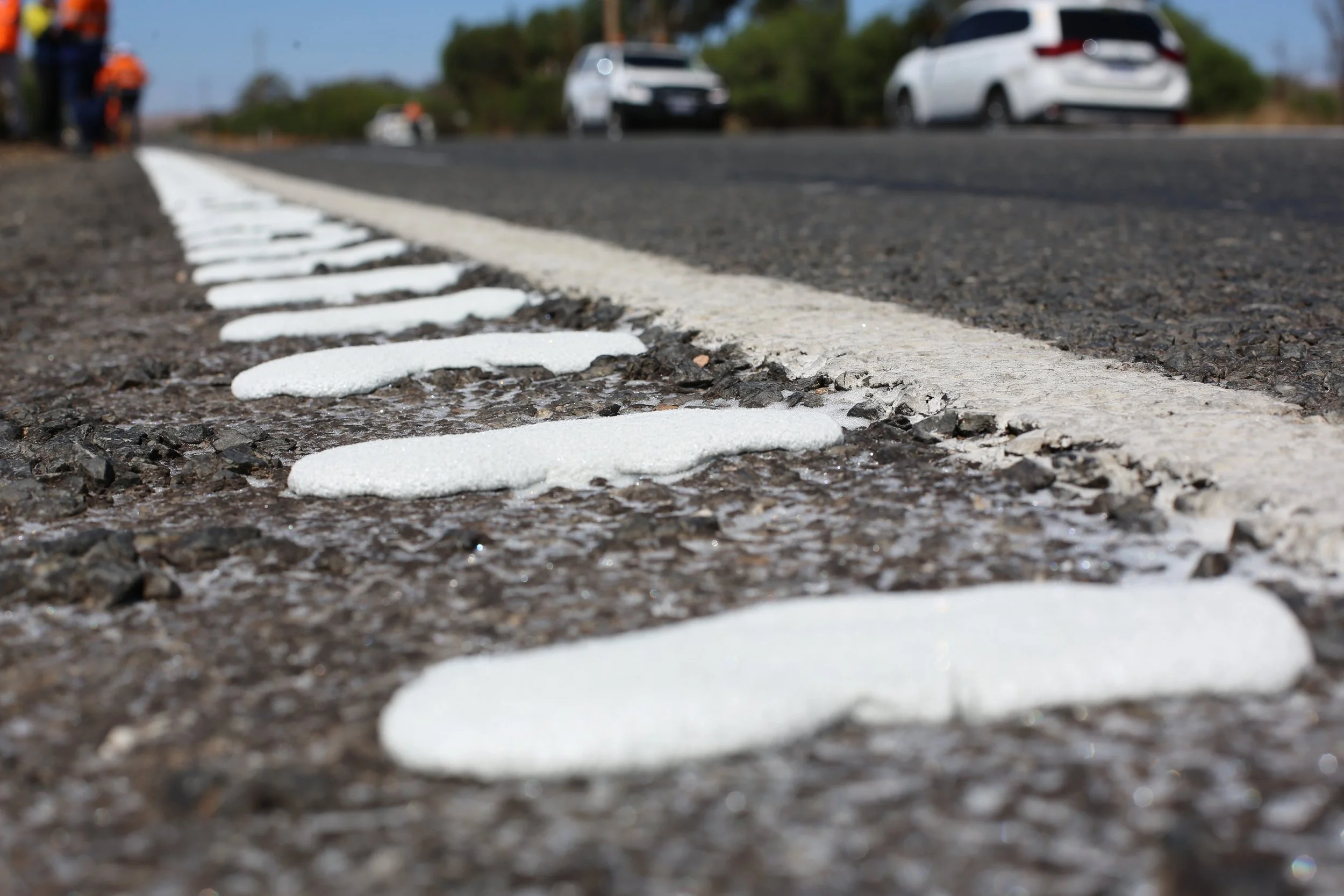
ATLM adds channels that do not depend on the driver looking. The raised profile creates a rumble the driver hears and feels through the steering wheel and seat. It works on a driver whose eyes are closed, whose attention is on a phone, or who is looking at the wrong part of the road.
It also improves the visual channel. The raised profile stands proud of the surface water film in wet conditions, which is when flat markings effectively disappear at night.
How does ATLM reduce run-off-road and head-on crashes?
A lane departure is not an instant event. The vehicle drifts, crosses the line, then leaves the sealed surface or enters the opposing lane. The window between the first and the last of those is usually short, but it is not zero, and it is the only window in which anything can be done.
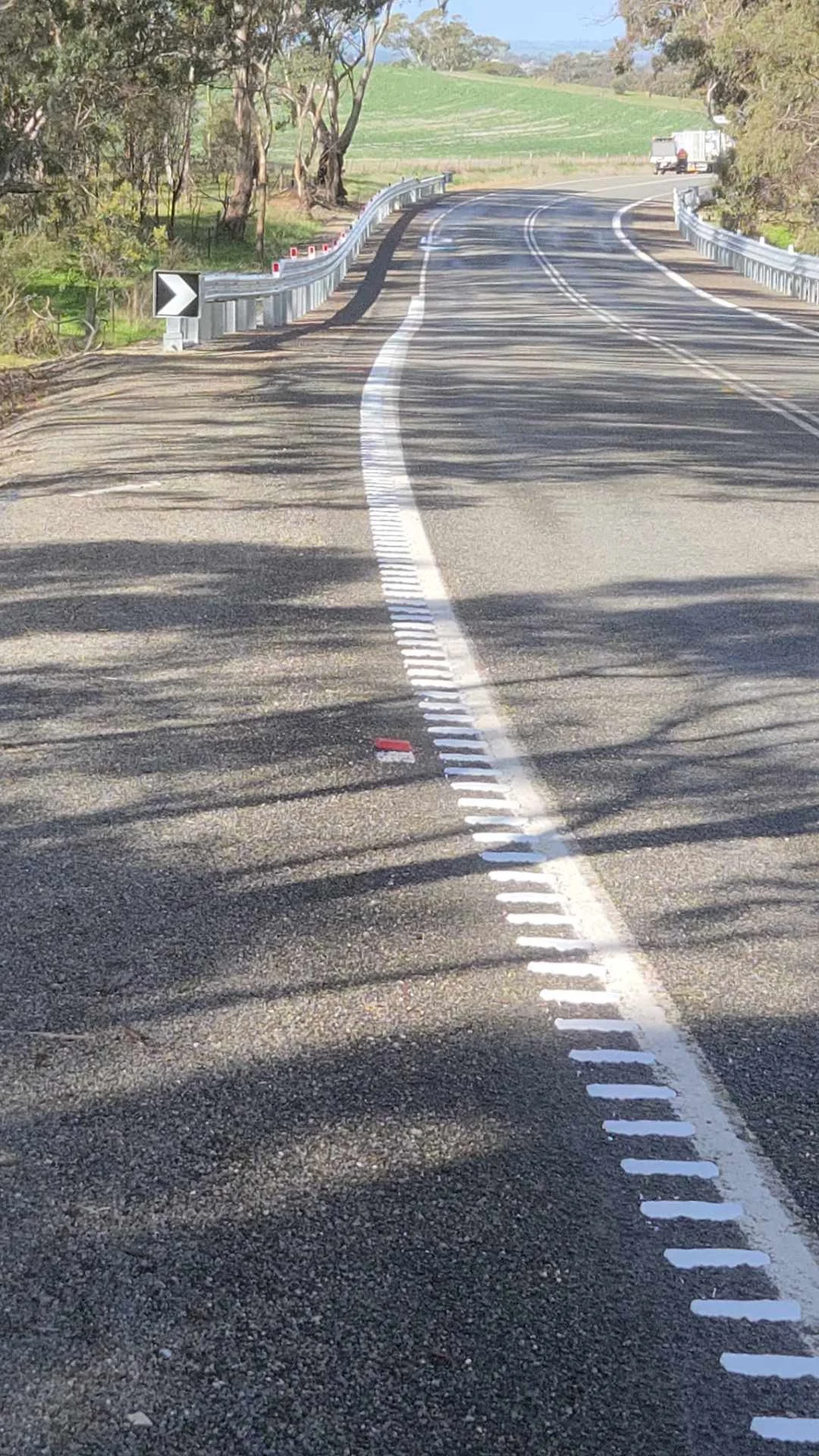
ATLM converts that window into a warning. Applied to an edge line, it fires as the vehicle drifts toward the shoulder, before the tyres reach unsealed material where steering input becomes unpredictable. Applied to a centreline, it fires before the vehicle enters the opposing lane.
That is also why the treatment is targeted rather than universal. It is worth the additional cost on a road where lane departure is the dominant crash type, and it is not worth much on a low-speed urban street where the crash types are intersection-related.
What is ATLM made from and how is it applied?
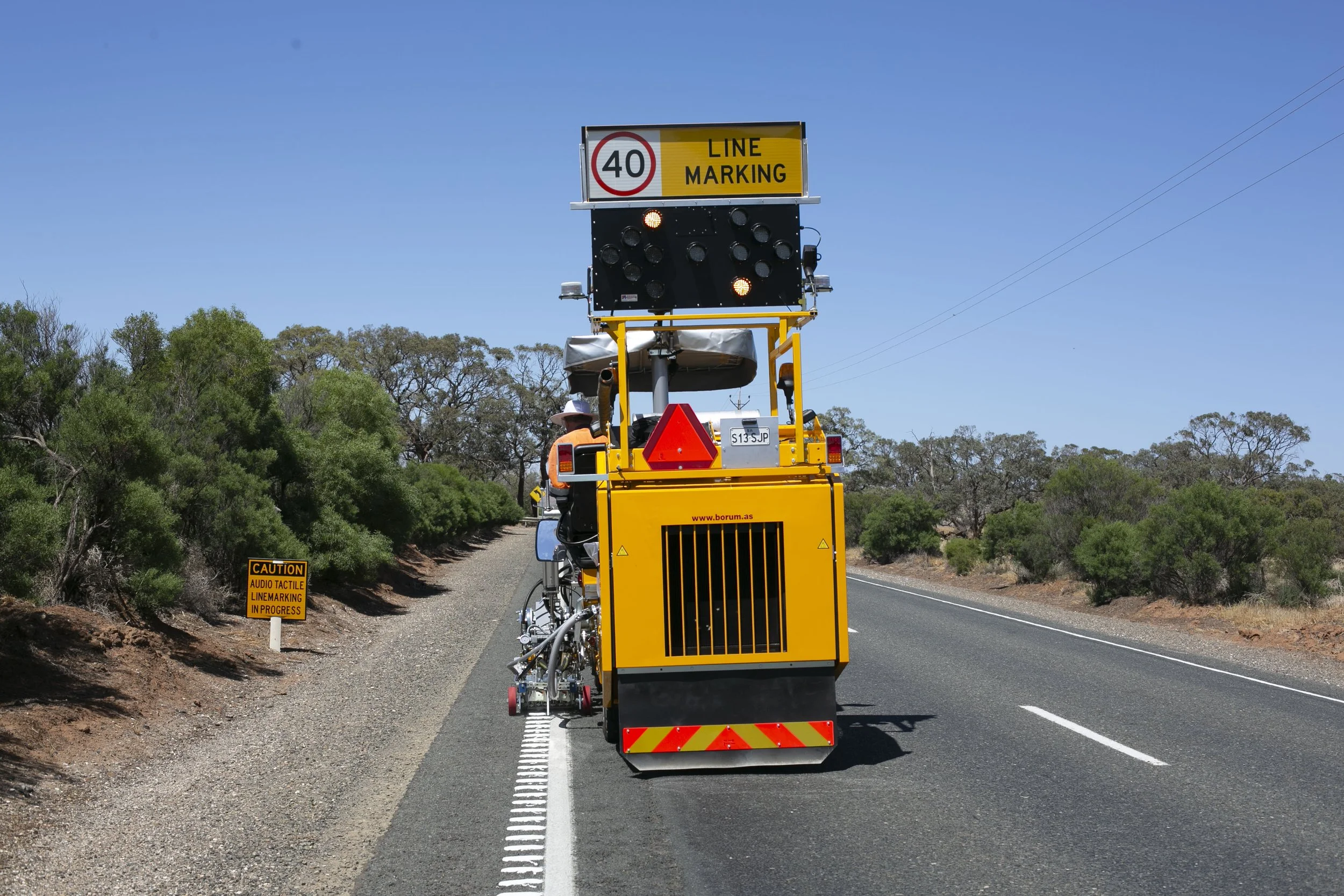
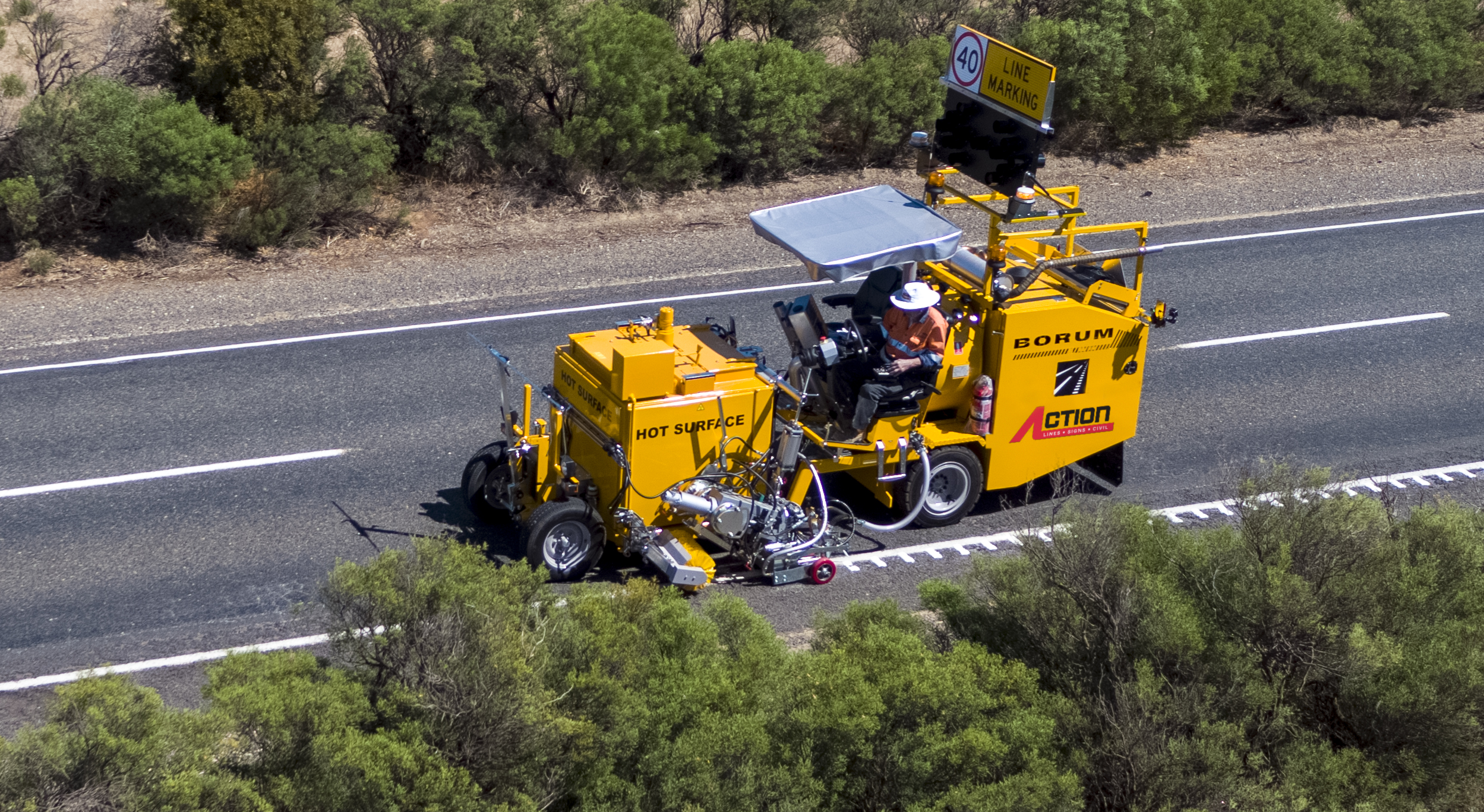
Cold applied plastic (CAP) is a durable pavement marking material applied without heat. Because it is laid cold, it is safer for the crew than hot-applied products, and it is significantly longer lasting than waterborne paint in high-stress environments.
The profile is what makes it audio tactile. Rather than a continuous flat band of material, the machine lays a raised form to a specified height and spacing, so that a tyre passing over it strikes a series of raised sections instead of a smooth surface. Profile geometry is set by the road authority specification for the application.
The application is not a variation on ordinary line marking. It requires different machinery, different material handling, and operators trained on that plant specifically.
Why does production-scale capability matter?
Action LSC is one of a small number of Australian contractors delivering cold applied plastic long line and ATLM at true production scale. The investment behind that is among the larger capital commitments made by an Australian line marking contractor in recent years, and it is still expanding, because authority demand is running ahead of national capacity.
For an asset owner planning a program, this is the practical issue. A treatment that only a handful of businesses can deliver at volume creates scheduling risk on any program of meaningful length. A machine that can lay a few hundred metres a shift and a machine that can deliver a state-wide program are not the same capability, even though both can technically be described as ATLM.
Reference program: Department for Infrastructure and Transport SA, supply and installation of Audio Tactile Line Marking across various roads in South Australia. $2.2M, January to December 2025, delivered ahead of schedule, incident and injury free.
What are the limitations of ATLM?
The first is external noise. The same rumble that alerts a drifting driver is audible outside the vehicle. On rural corridors this is rarely an issue. Where a treated section runs close to housing, it becomes a design consideration, and some authorities restrict application in those locations or specify a modified profile.
The second is the substrate. ATLM relies on a raised profile bonded to the pavement. Where the surface is failing, contaminated or heavily cracked, the profile has nothing sound to bond to, and the treatment will not deliver its design life regardless of how well it is applied. On those sections the pavement question must be resolved first.
Frequently asked questions about ATLM
Is ATLM the same as a rumble strip?
Short answer: No. A milled rumble strip is cut into the pavement. ATLM is a marking laid on top of it.
They do a similar job through different means, and they suit different situations. A milled strip removes material from the pavement and cannot be applied where the seal is thin or the pavement is in poor condition. ATLM adds material and performs the delineation function, which a milled strip does not.
Can ATLM be applied to an existing road without resurfacing?
Short answer: Usually, provided the pavement is sound.
ATLM is regularly applied as a safety retrofit on existing rural corridors. The controlling factor is surface condition rather than age.
How long does ATLM last?
Short answer: Substantially longer than waterborne paint in the same location, because cold applied plastic is a far more durable material.
Does ATLM work in the wet?
Short answer: Better than flat marking does. The raised profile stands above the surface water film that causes flat markings to lose visibility at night in rain.
ATLM and cold applied plastic delivery from Action LSC
Action LSC delivers Audio Tactile Line Marking and cold applied plastic long line at production scale for state road authorities, principal contractors and local government, from seven depots across Queensland, New South Wales, the ACT and South Australia.