
Bridge Expansion Joint Replacement Under Live Traffic: Five Gold Coast Bridges for City of Gold Coast
Action LSC replaced bridge expansion joints, sealed bridge deck cracking and completed permanent pavement repairs across five bridge structures on the Gold Coast, Queensland, working for principal contractor Hazell Bros on behalf of the City of Gold Coast.
The works were delivered in around 20 shifts over two months under daytime lane closures, using two joint systems — polymer nosing joints with elastomeric sealant, and asphaltic plug joints. Scope grew mid-project by approximately 250 linear metres of deck crack sealing, which was absorbed without extending the programme.
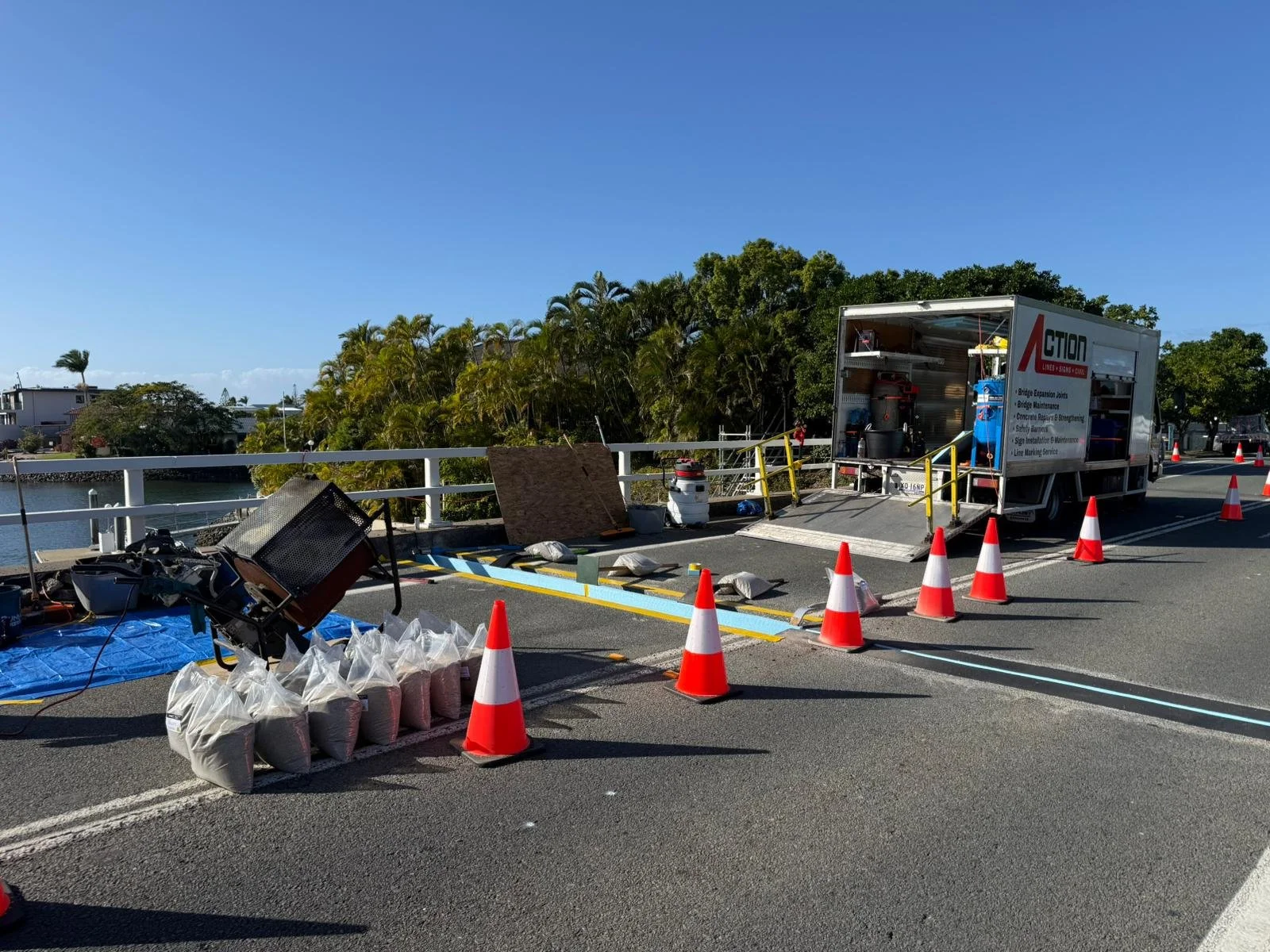
Project Snapshot
| Client (Principal Contractor) | Hazell Bros |
|---|---|
| Location | Gold Coast, Queensland |
| Sector | Local government road infrastructure |
| Services | Bridge expansion joint replacement · bridge deck crack sealing · permanent asphalt pothole repair · line marking and raised pavement markers |
| Delivery team | Action LSC Bridge Maintenance |
| Duration | Approximately 20 shifts across a two-month period |
| Crew size | 3–4 person specialist crew |
| Scale | 5 bridge structures · 100+ metres of expansion joint replacement · approximately 250 metres of deck crack sealing · permanent pothole repairs · line marking on 2 structures |
| Contract value | Approximately $200,000 |
| Traffic condition | Live traffic, daytime lane closures, public access maintained throughout |
What work did Action LSC deliver on the Gold Coast bridges?
Action LSC delivered specialist bridge maintenance and rehabilitation works across five separate bridge structures on the Gold Coast, covering expansion joint replacement, bridge deck crack sealing, permanent asphalt pothole repair and pavement delineation. Action LSC was engaged by Hazell Bros as Principal Contractor, with the City of Gold Coast as the asset owner, and was responsible for planning, programming and delivering all these activities within its scope.
The scope comprised:
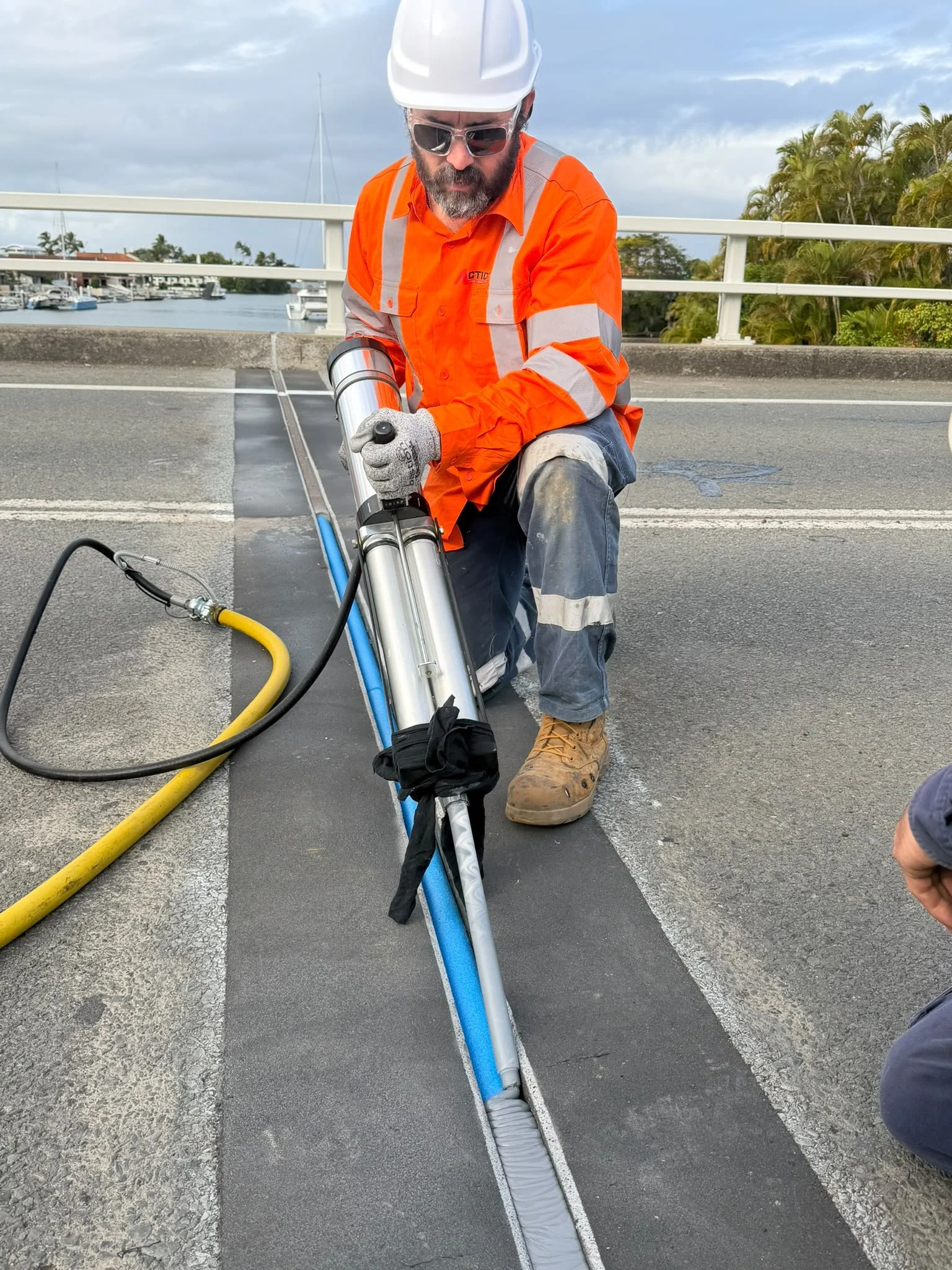
Replacement of bridge expansion joints across five structures, using two specialist systems — polymer nosing expansion joints with elastomeric sealant, and asphaltic plug joints — totalling more than 100 metres of joint.
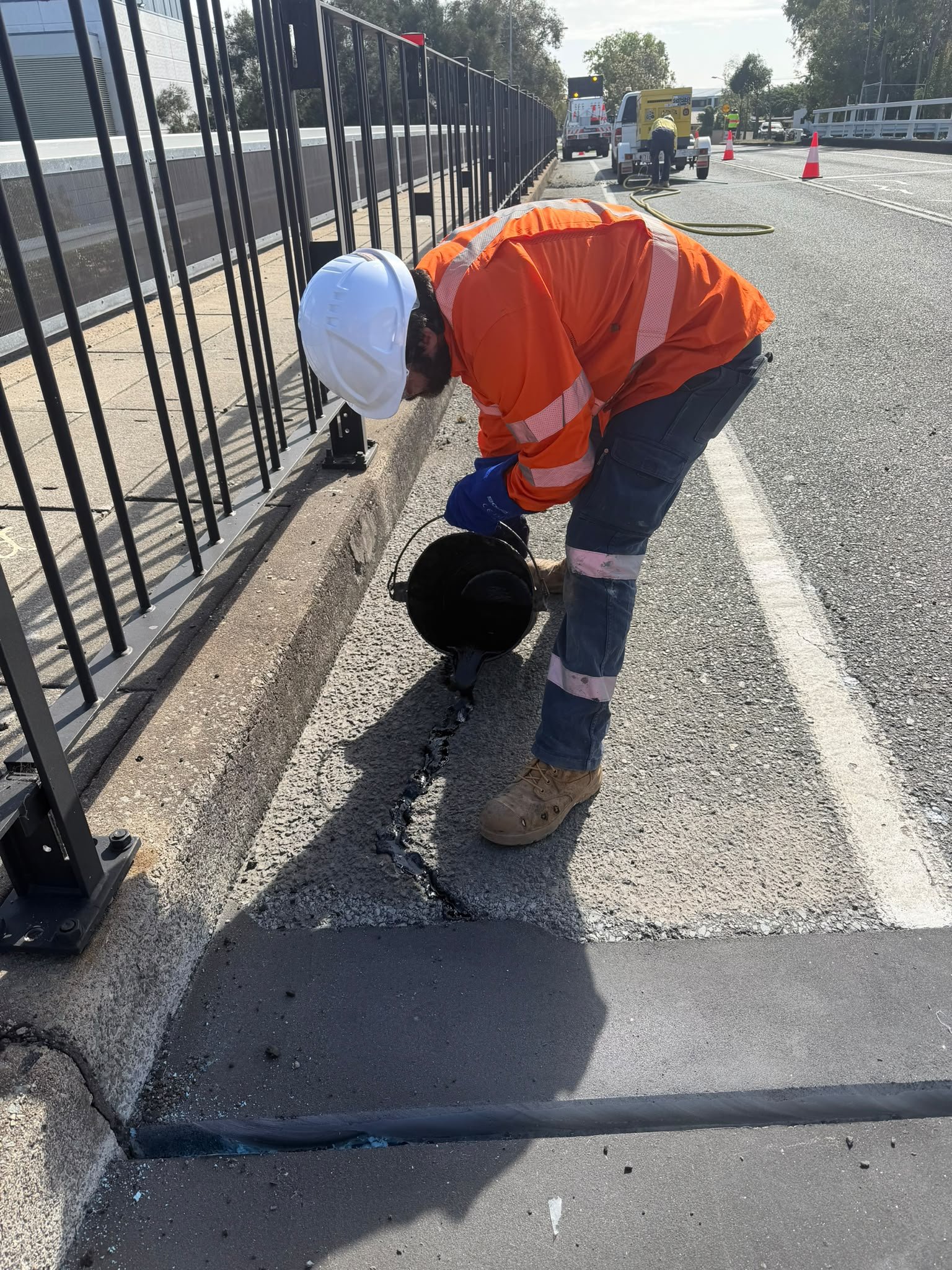
Bridge deck crack sealing using hot-applied bituminous crack sealant, over approximately 250 linear metres.
Permanent asphalt pothole repair, including removal of failed pavement and reinstatement with new asphalt.
Line marking following resurfacing on two structures, including edge lines, broken lane lines, raised reflective pavement markers (RPMs) and bicycle symbols.
All activities were completed under daytime lane closures while the bridges remained open to the travelling public.
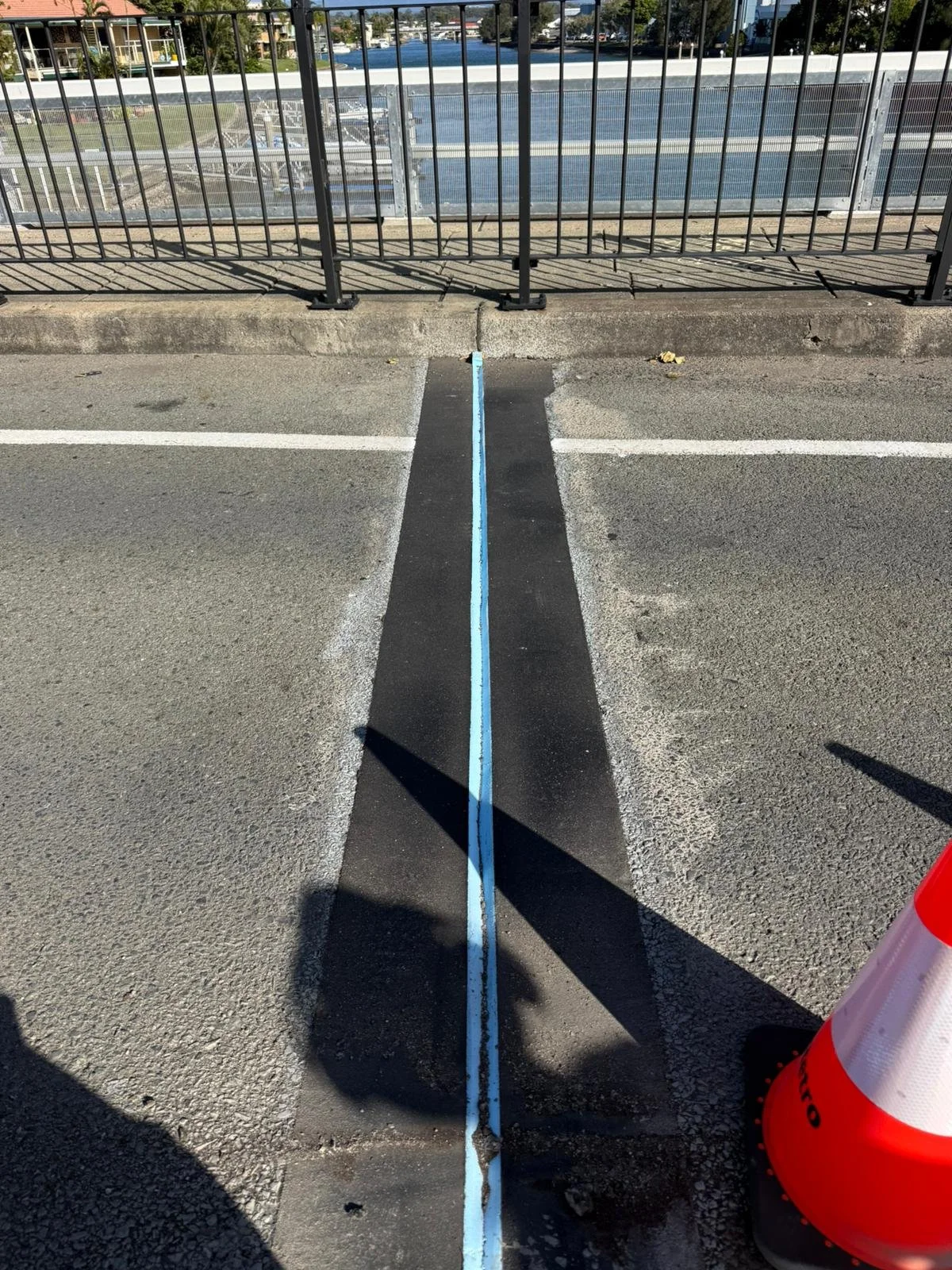
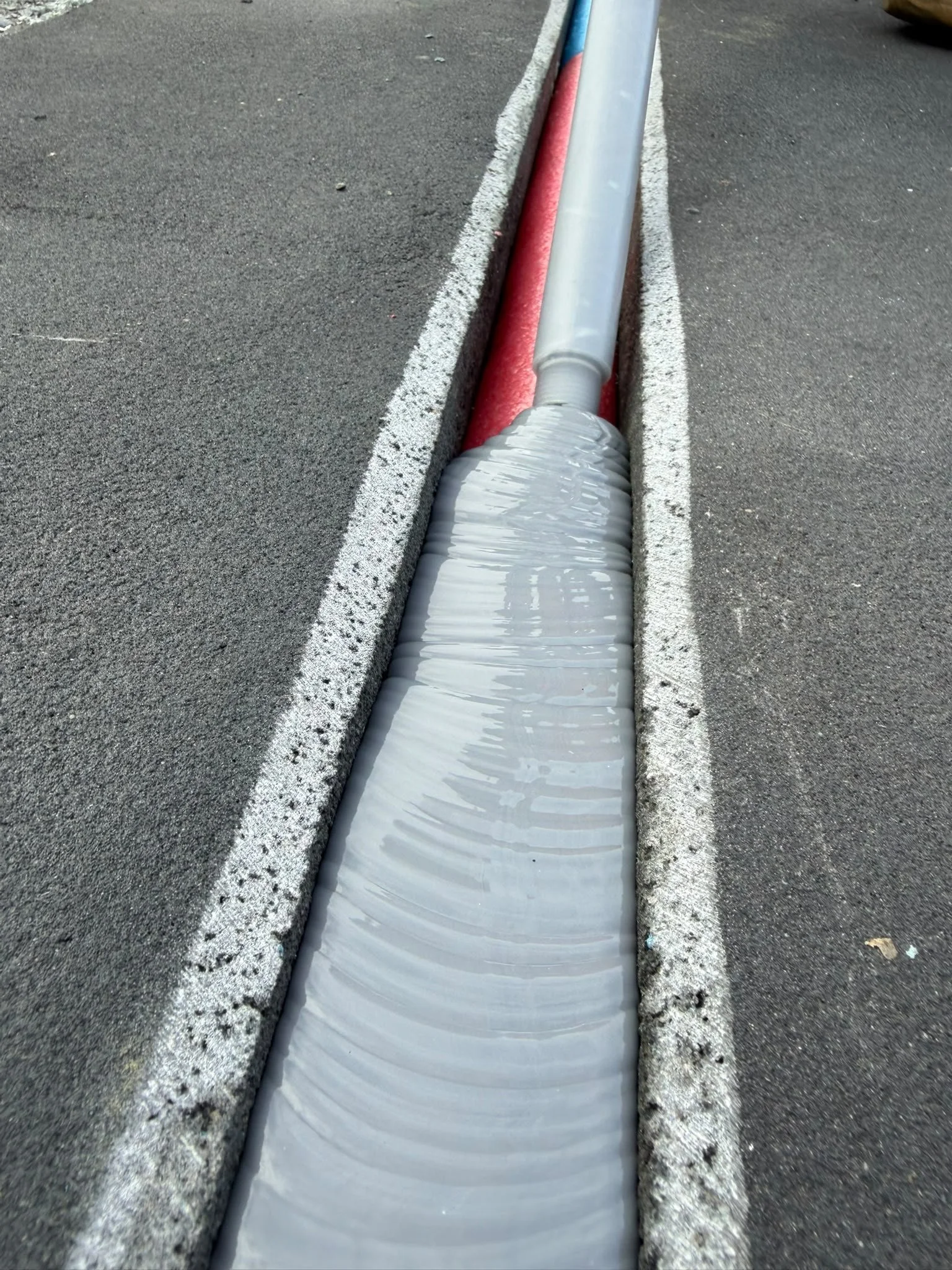
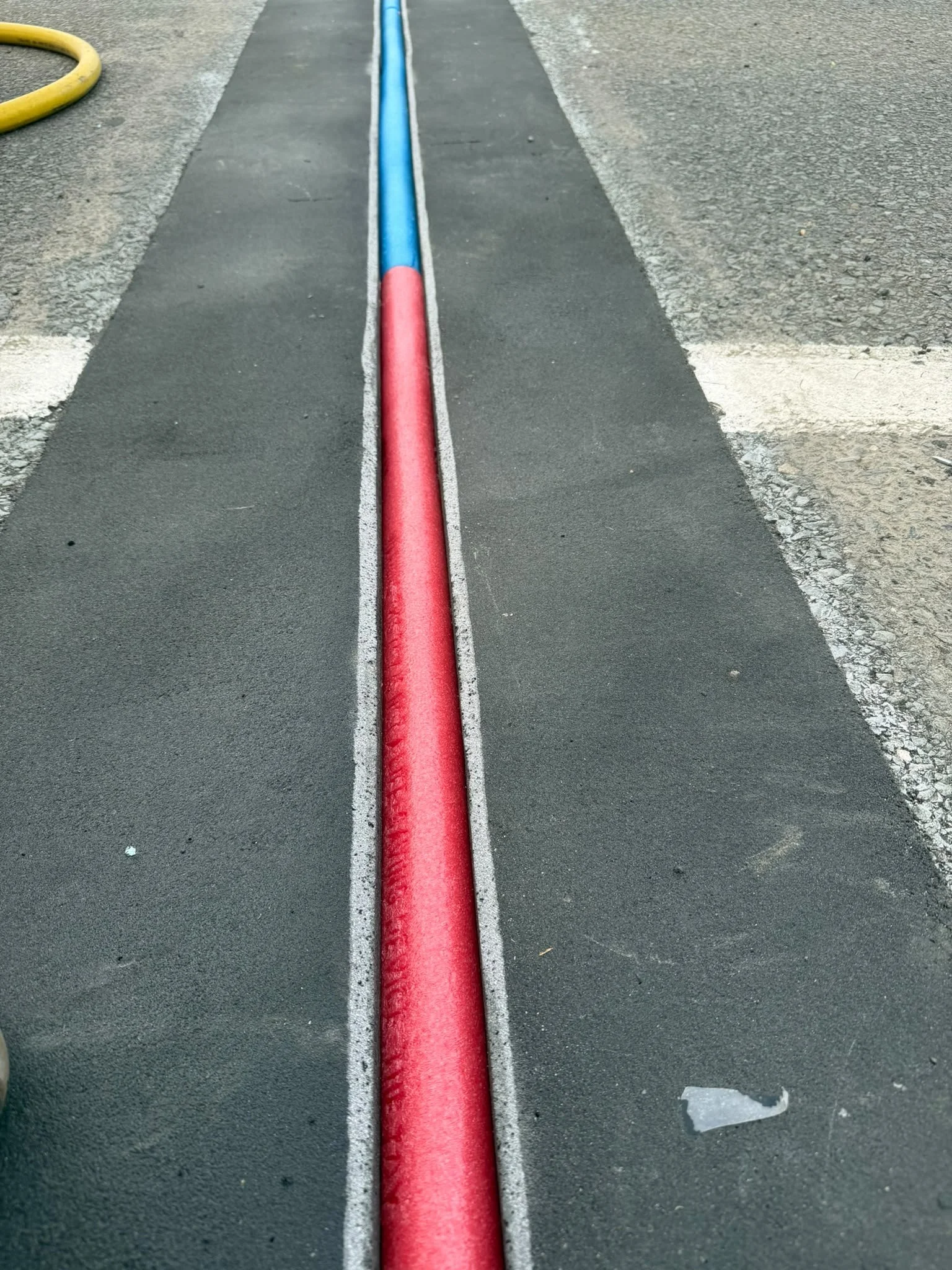
Why do bridge expansion joints need to be replaced?
Bridge expansion joints are replaced when the joint seal or nosing material has deteriorated to the point that it no longer accommodates deck movement or keeps water and debris out of the structure below. A failed joint allows water, grit and de-icing or marine salts to reach girder ends, bearings and headstocks, accelerating corrosion and shortening the life of far more expensive structural elements. Joint replacement is therefore a preventative maintenance activity, not a cosmetic one.
Joint condition also has a direct road-user effect. Deteriorated joints cause noise, vibration and a rough ride, and in advanced cases can present a hazard to motorcyclists and cyclists. Two joint systems were used on this project, selected to suit the individual structures.
Polymer nosing expansion joints with elastomeric sealant
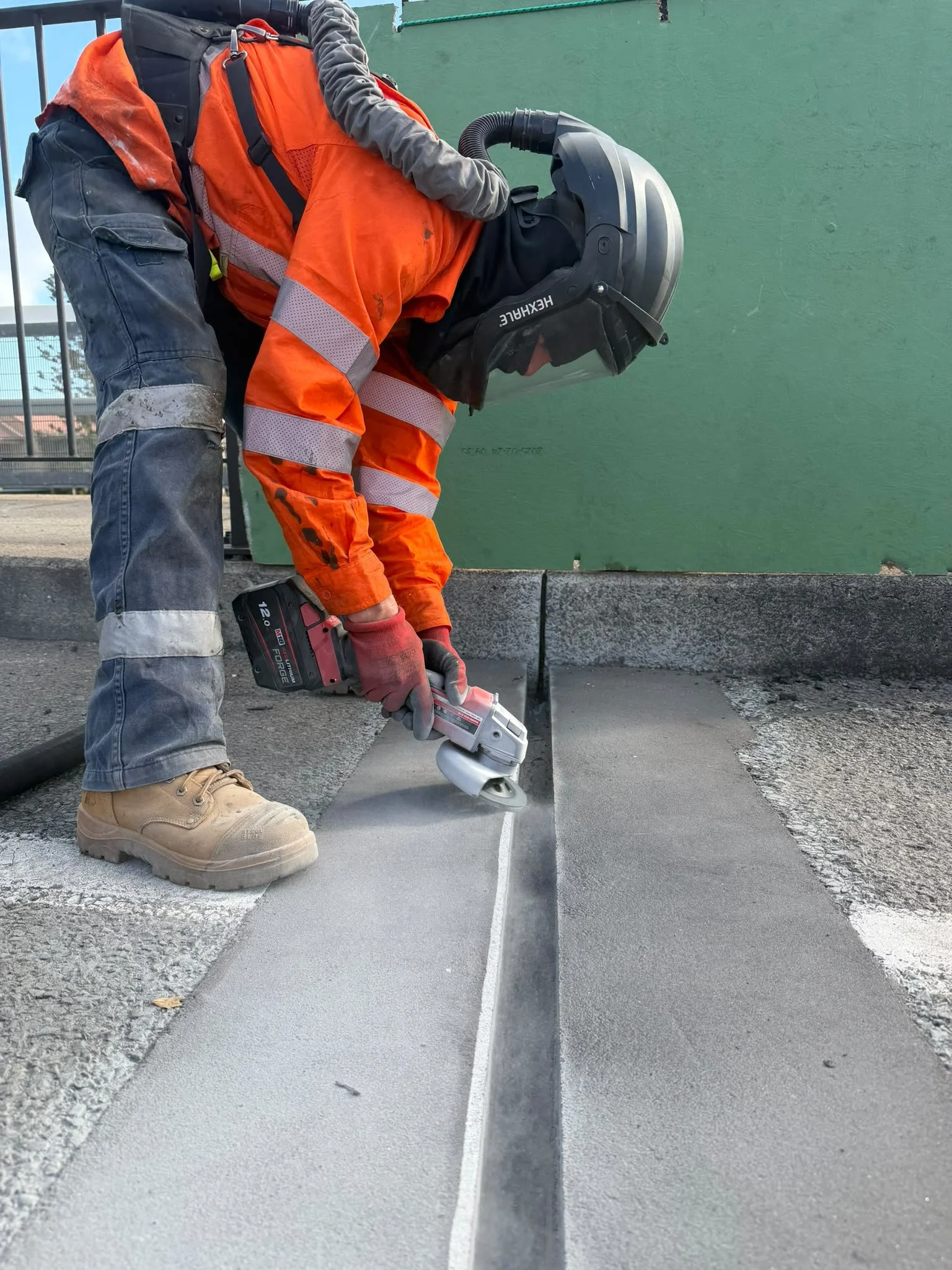
A polymer nosing expansion joint uses a polymer-modified nosing material cast either side of the joint gap, with an elastomeric sealant or seal element spanning the gap to accommodate movement. The nosing carries the wheel loads at the joint edge and protects the deck arris; the sealant keeps the joint watertight. The system suits joints with moderate movement ranges and is well suited to staged replacement under lane closures, provided the nosing material is allowed to reach strength before traffic returns.
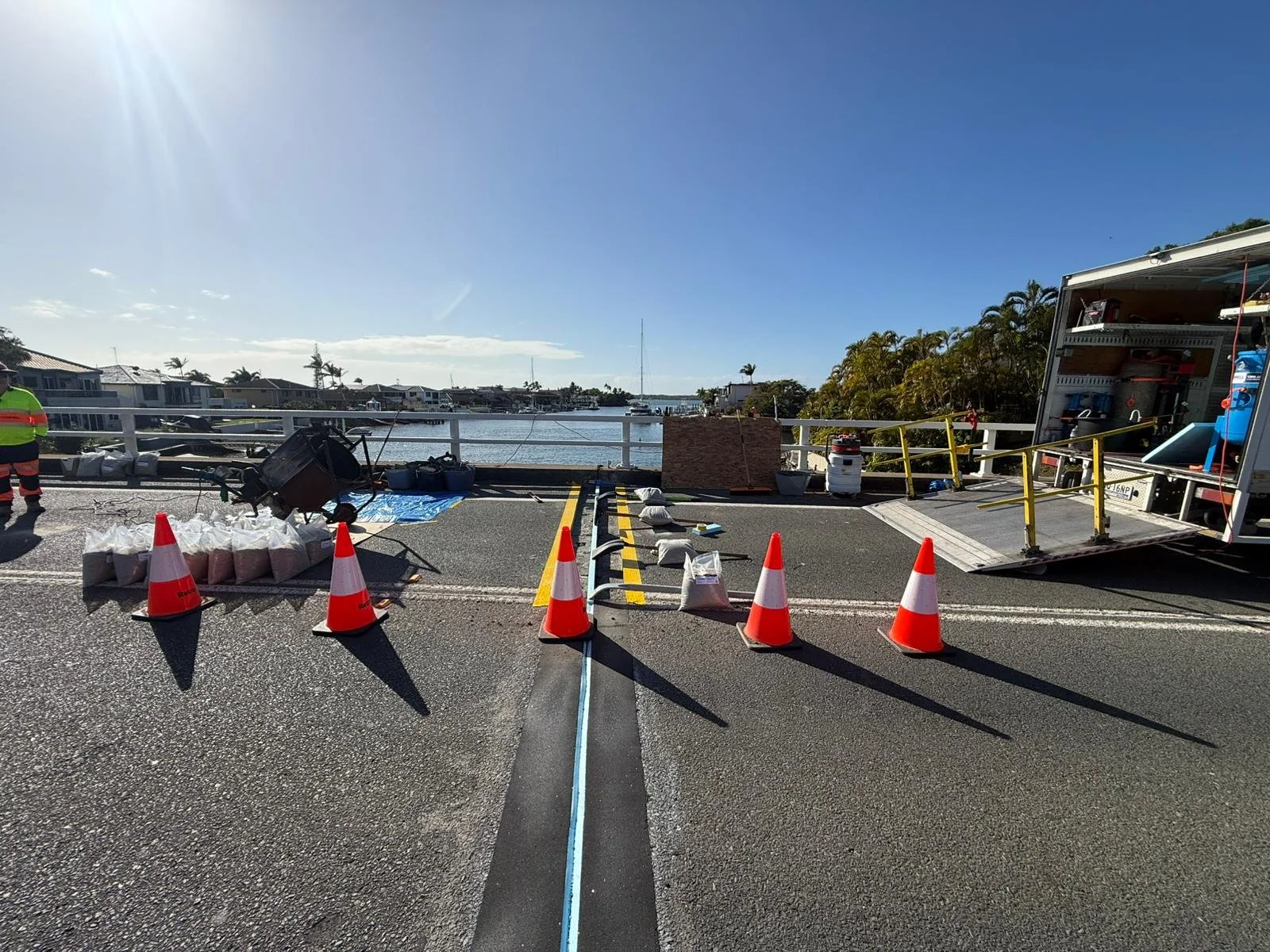
Asphaltic plug joints
An asphaltic plug joint is a flexible joint formed from a polymer-modified bituminous binder and selected aggregate, placed over a bridging plate that spans the deck gap. It is laid as a continuous plug across the carriageway and is often chosen for smaller movement ranges and for rehabilitation of existing joints, because it can be installed quickly and produces a seamless running surface with no exposed steelwork. Cure and cooling time before trafficking is the controlling factor on the shift programme.
Bridge deck crack sealing
Bridge deck crack sealing is the routing or cleaning and filling of cracks in the deck wearing surface with a hot-applied bituminous sealant, to stop water entering the pavement layers and the deck beneath. On this project approximately 250 linear metres of additional deck cracking was identified during construction and sealed using hot-applied bituminous crack sealant.
What made these bridge works difficult to deliver?
The difficulty was not the individual activities — it was completing five structures’ worth of specialist work inside short daytime possessions, with materials that need curing time before traffic can return. Every work area had to be removed, prepared, installed, cured and reinstated within a single approved possession window, or the lane could not be reopened. Four conditions drove the delivery risk.
Restricted daytime lane closures and possession windows
All works were sequenced around restricted daytime lane closures on live public roads, with access maintained for the travelling public throughout. Over-running a possession would have meant extended lane closures, longer exposure of the crew to live traffic, disruption to motorists and programme impact for the Principal Contractor. Holding the agreed possession periods was the single most important delivery constraint on the project.
Material cure times inside the possession window
Specialist joint materials must reach strength before a lane can be safely reopened, so the usable working time inside each possession is shorter than the closure itself. This was most critical for the expansion joint replacements across the five structures, where two different systems with different cure characteristics were in use. Action LSC programmed the joint works backwards from the reopening time so that curing sat inside the possession rather than pushing past it.
Additional bridge deck cracking identified during construction
Joint site inspections with the client identified approximately 250 linear metres of additional bridge deck pavement cracking that was not fully apparent in the original scope. The additional crack sealing had to be priced, programmed and delivered inside the existing delivery timeframe rather than as a separate mobilisation.
Asphalt depths exceeding the original design assumptions
Existing asphalt pavement depths were found to exceed the depths assumed in the original design. Greater depth means more material to remove and more material to reinstate, which changes both the quantity take-off and the time each work area occupies the possession. The construction methodology had to be reviewed during delivery and additional materials sourced at short notice.
Multi-party coordination across five separate work fronts
Delivery involved Hazell Bros as Principal Contractor, City of Gold Coast representatives, traffic management providers and specialist material suppliers. Action LSC coordinated with all parties to maintain access, sequence the work packages and confirm that completed works met the specification and the construction programme — while holding consistent safety and quality standards across five separate structures.
How did Action LSC deliver the works under live traffic?
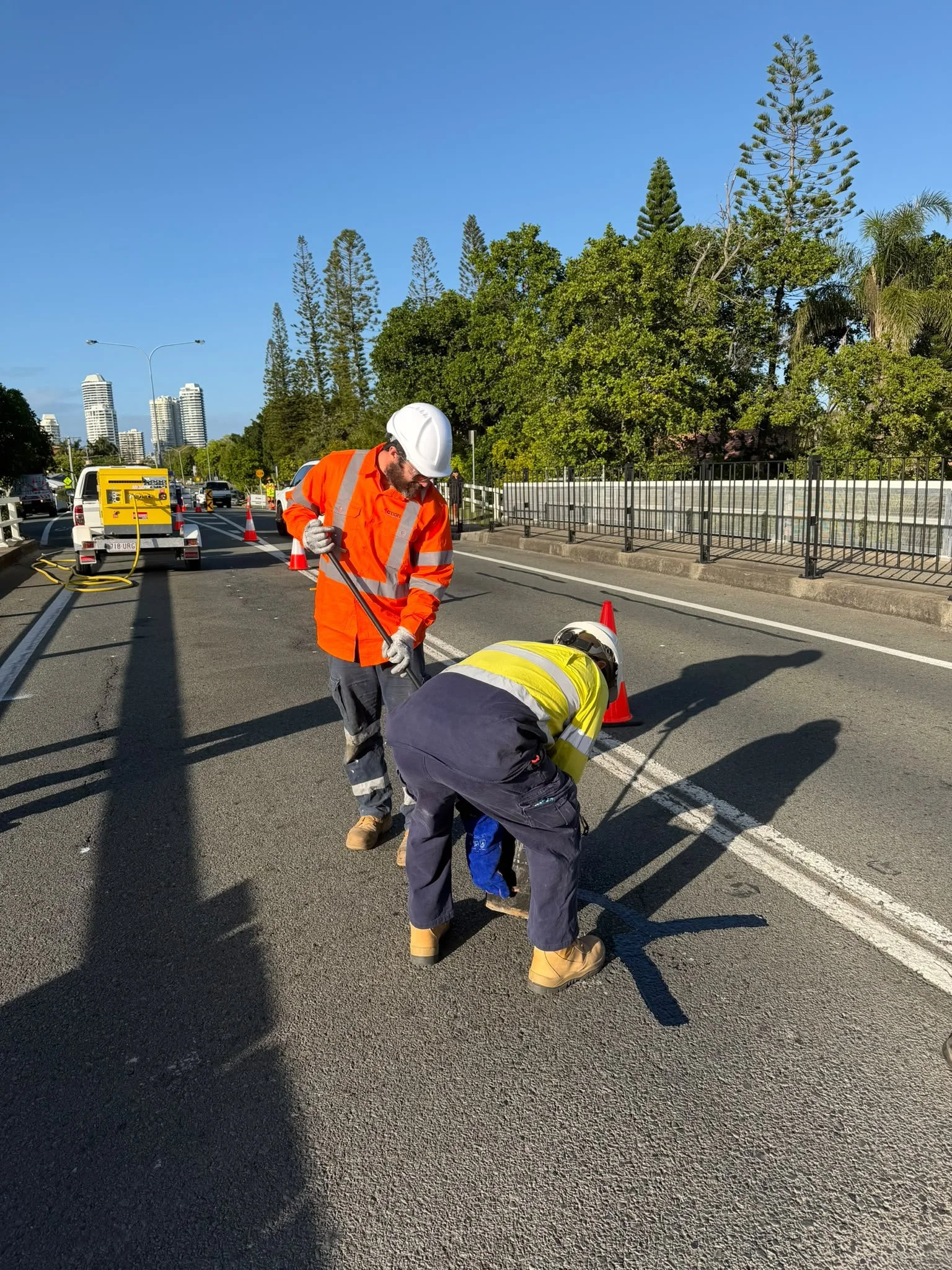
Action LSC planned the works around the available daytime lane closures and sequenced activities so that each work area could be completed, cured and safely reopened within its approved possession period. Productivity was maximised inside the window rather than by extending it.
Planning and programming
Action LSC programmed the five structures as a linked sequence rather than five separate jobs, coordinating the work packages against traffic management requirements and material curing periods. The expansion joint works were specifically programmed to allow sufficient cure time for the specialist materials before traffic was permitted back onto the completed lane.
Resourcing and coordination
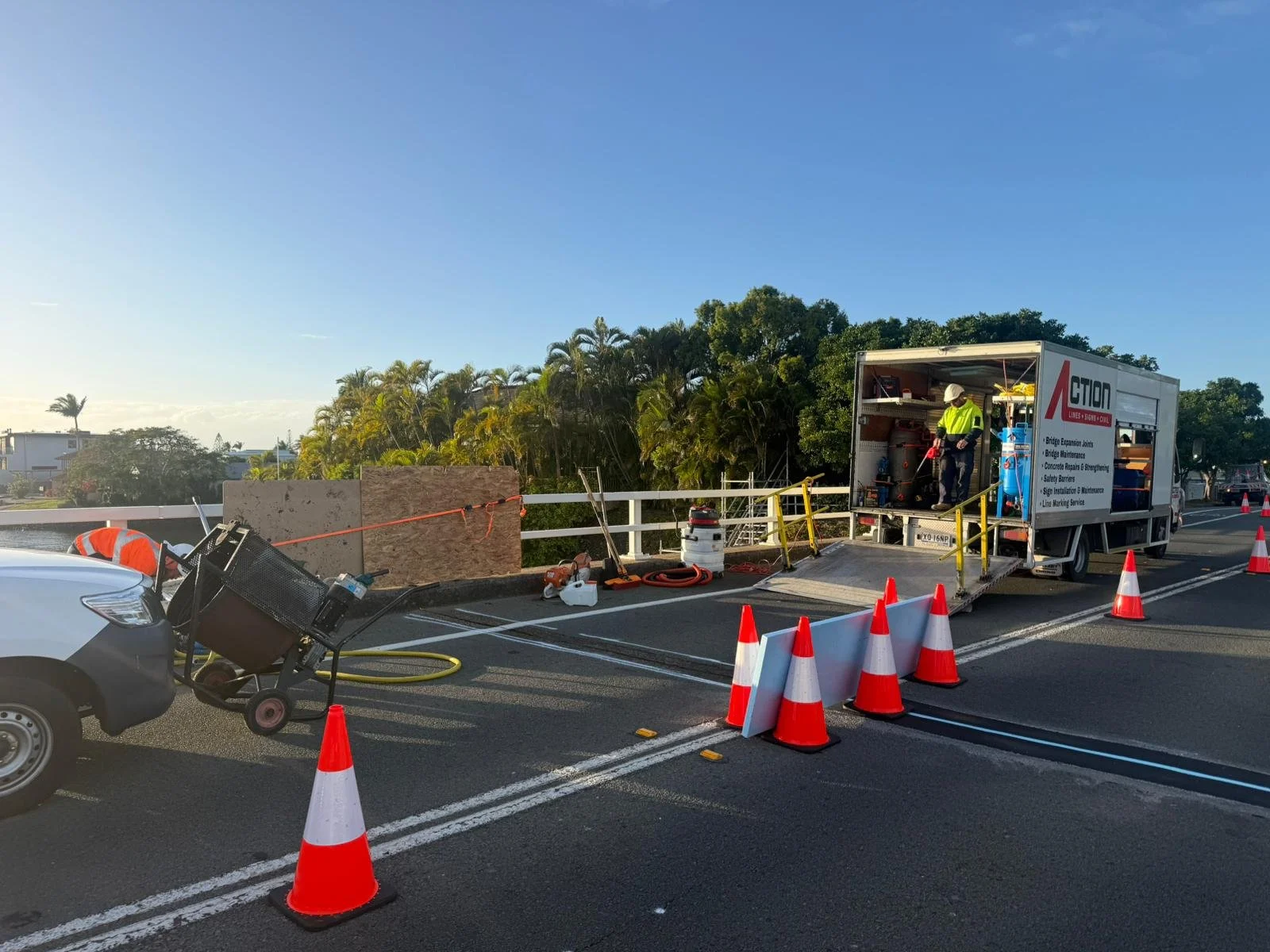
A 3–4 person specialist crew delivered the works, with Action LSC providing the supervision, plant and technical capability required. Delivery was coordinated with Hazell Bros, Council representatives, traffic management providers and specialist suppliers so that materials and resources were on site when the possession opened — the point at which a delayed delivery becomes a lost shift.
Materials and systems
Materials were selected to suit each structure and each maintenance activity:
Polymer nosing expansion joint systems with elastomeric sealant for the relevant bridge joints.
Asphaltic plug joint systems at the other expansion joint locations.
Hot-applied bituminous crack sealant for approximately 250 linear metres of deck cracking.
New asphalt for permanent pothole and pavement reinstatement.
Road marking materials and raised reflective pavement markers for pavement delineation.
Running multiple bridge maintenance disciplines through one crew and one programme removed the separate mobilisations, separate possessions and separate traffic management setups that a multi-contractor split would have required.
Delivery on site
Works were delivered progressively across the five structures under daytime lane closures, with removal, preparation, installation, curing and reinstatement sequenced within each possession. Expansion joint replacement was managed most closely, as the cure requirement set the reopening time. Following resurfacing, Action LSC completed pavement delineation on two of the structures, including edge lines, broken lane lines, RPMs and bicycle symbols. Public access was maintained throughout.
How were the unforeseen site conditions managed?
Both changed conditions were resolved inside the existing programme rather than through an extension of time. The additional 250 linear metres of deck crack sealing was incorporated into the works after joint site inspections with the client, using hot-applied bituminous crack sealant, without compromising the overall delivery timeframe. When asphalt depths were found to exceed the design assumptions, Action LSC worked with Hazell Bros and the City of Gold Coast to assess the issue, revise the construction methodology and source additional materials at short notice.
The practical enabler in both cases was that the client and the Principal Contractor were in the conversation early — the extra cracking was found on a joint inspection, not raised as a variation after the fact. That is what made it possible to re-plan the remaining shifts around the added scope instead of adding shifts to the end of the programme.
What were the results?
The works were delivered safely and progressively across all five bridge structures within the approved possession periods, with the full scope — including the additional crack sealing identified during construction — completed inside the original two-month delivery timeframe.
| Measure | Outcome |
|---|---|
| Bridge structures completed | 5 |
| Expansion joint replacement | More than 100 metres, across two specialist joint systems |
| Bridge deck crack sealing | Approximately 250 linear metres — added during construction, delivered within the original programme |
| Pavement repair | Permanent asphalt pothole and pavement reinstatement |
| Delineation | Edge lines, broken lane lines, RPMs and bicycle symbols reinstated on 2 structures |
| Programme | Approximately 20 shifts across two months |
| Possession performance | Each work area completed, cured and reopened within its approved possession window |
| Public access | Maintained for the full duration of the works |
What made the difference on this project?
Four things separated this delivery from a routine bridge maintenance package.
Programming backwards from the reopening time
The controlling constraint was not how long the work took — it was how long the material needed before traffic returned. Building the shift plan around cure time rather than around labour hours is what kept every lane reopening on schedule.
Absorbing scope growth without extending the programme
An additional 250 linear metres of crack sealing appearing mid-project would normally trigger either an extension of time or a second mobilisation. Re-planning the remaining shifts around it kept both off the table.
One crew across four maintenance disciplines
Expansion joints, crack sealing, pavement repair and delineation were delivered by a single specialist crew under one programme, which removed multiple mobilisations, separate traffic management setups and the interface risk that sits between separate subcontractors.
Joint inspections with the asset owner
Walking the structures with the client is what surfaced the additional deck cracking early enough to plan around it — an inspection habit rather than a technical capability, and the reason the change landed as re-planning instead of a claim.
Bridge Maintenance Services from Action LSC
Action LSC delivers specialist bridge maintenance and rehabilitation for local government, state road authorities and principal contractors, including bridge expansion joint replacement, bridge deck crack sealing, permanent pavement repair and pavement delineation. Works are planned and programmed around live traffic constraints and possession windows, with a single crew able to cover multiple maintenance disciplines on the same structure.
Action LSC operates across South Australia, Queensland and New South Wales/ACT, and delivers line marking, safety barriers and guardrail, road furniture, minor civil works and sign manufacture and installation.
Frequently asked questions about bridge expansion joint replacement
How long does it take to replace a bridge expansion joint?
A single bridge expansion joint replacement is typically completed within one shift under a lane closure, but the controlling factor is not the installation — it is the time the specialist material needs to cure before traffic can return. On this Gold Coast project, more than 100 metres of joint across five structures was replaced over approximately 20 shifts, with each work area programmed so that curing finished inside the approved possession window.
Can bridge expansion joints be replaced without closing the bridge?
Yes. Expansion joint replacement is routinely delivered under staged lane closures with the bridge remaining open to traffic, which is how all five structures on this project were completed. Staged replacement requires the joint to be split into sections that can each be removed, installed and cured within a single possession, and it requires the work sequence to be coordinated with the traffic management provider.
What is the difference between a polymer nosing joint and an asphaltic plug joint?
A polymer nosing joint uses a polymer-modified nosing cast either side of the deck gap with an elastomeric sealant spanning it, while an asphaltic plug joint is a flexible bituminous plug laid over a bridging plate to form a continuous, seamless running surface. Polymer nosing systems generally suit larger movement ranges and give a defined, durable joint edge; asphaltic plug joints suit smaller movements, install quickly and leave no exposed steelwork. Both were used on this project, selected structure by structure.
Why does bridge deck cracking need to be sealed?
Deck cracking is sealed to stop water entering the pavement layers and the structural deck beneath. Once water gets in, it accelerates pavement failure and can reach reinforcement and bearings, turning a low-cost sealing job into a structural repair. Hot-applied bituminous crack sealant is the standard treatment for deck wearing surface cracking of the type identified on this project.
Who is responsible for bridge maintenance on Gold Coast roads?
Bridges on Council-controlled roads on the Gold Coast are the responsibility of the City of Gold Coast, while bridges on state-controlled roads are the responsibility of the Queensland Department of Transport and Main Roads. On this project the City of Gold Coast was the asset owner, Hazell Bros was the Principal Contractor and Action LSC delivered the specialist bridge maintenance scope.