Class 1, Class 2 and Special Grade Retroreflective Sheeting: What's the Difference?
Retroreflective sheeting is the material that makes a road sign visible at night, and it is the single most consequential specification decision in sign manufacture. Class 1, Class 2 and Special Grade sheeting differ in how much light they return to a driver's eye, how wide an angle they perform at, and how long they hold that performance in service. Specifying the wrong class produces a sign that is legally compliant on paper and functionally inadequate on the road, or one that costs considerably more than the location warranted.
What does retroreflective sheeting actually do?
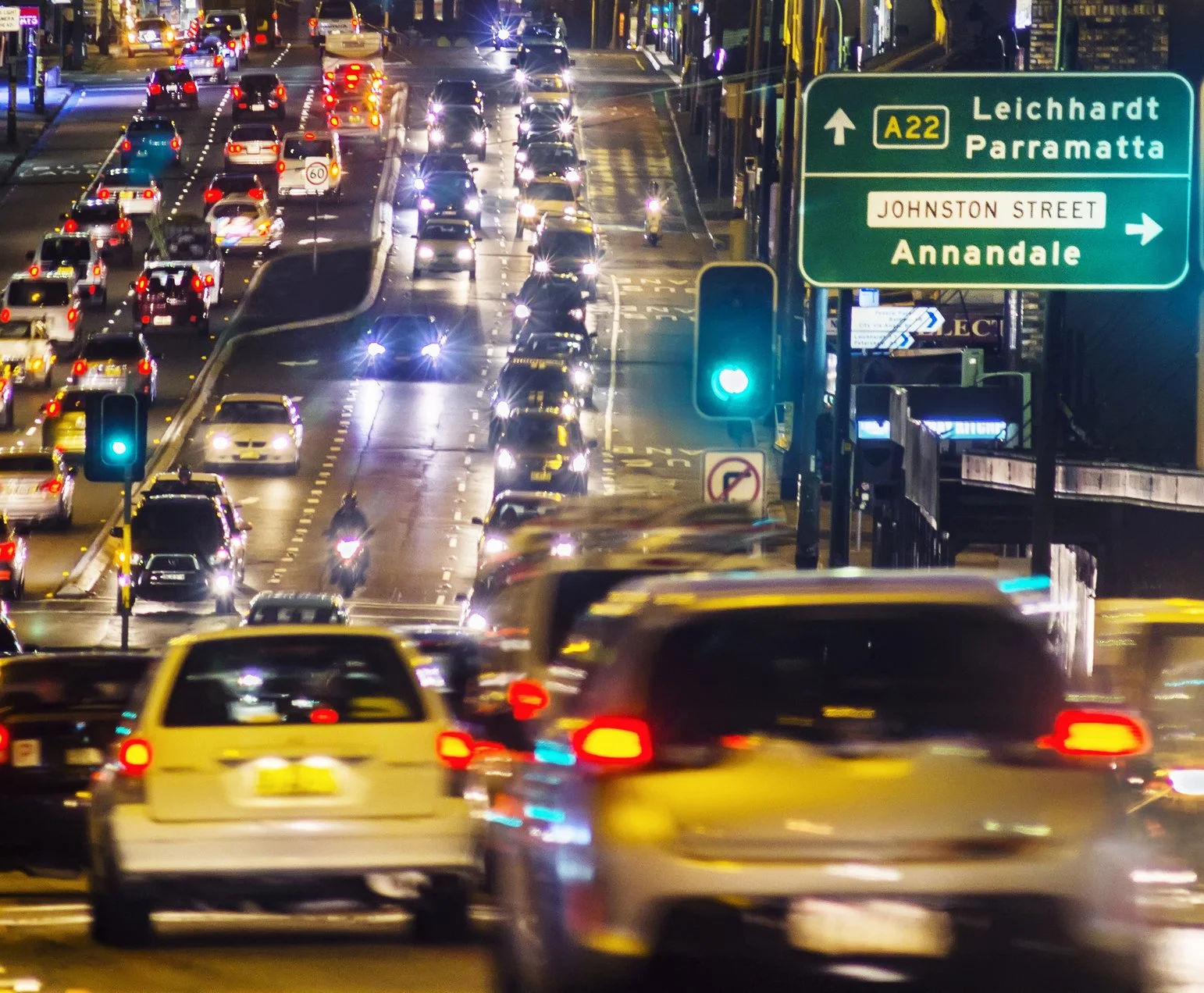
An ordinary painted surface scatters light in all directions. Very little of it returns along the path it arrived from, which is why an unlit painted sign is close to invisible at night.
Retroreflective sheeting is engineered to send light back the way it came. The vehicle's headlights supply the light, the sheeting returns it, and because the driver's eyes sit close to the headlights, the returned light reaches them. No external lighting is required, and the sign works at exactly the moment it is most needed.
The performance difference between sheeting classes comes down to how efficiently that return happens, and how well it holds up as the geometry gets less favourable.
What is the difference between the sheeting classes?
The three classes differ in how they are constructed, how they perform at night and where they are generally applied.
Class 2 uses an enclosed lens, glass bead construction. It has the lowest night-time performance of the three and is generally applied to lower-speed roads, local streets, and some parking and facility signage.
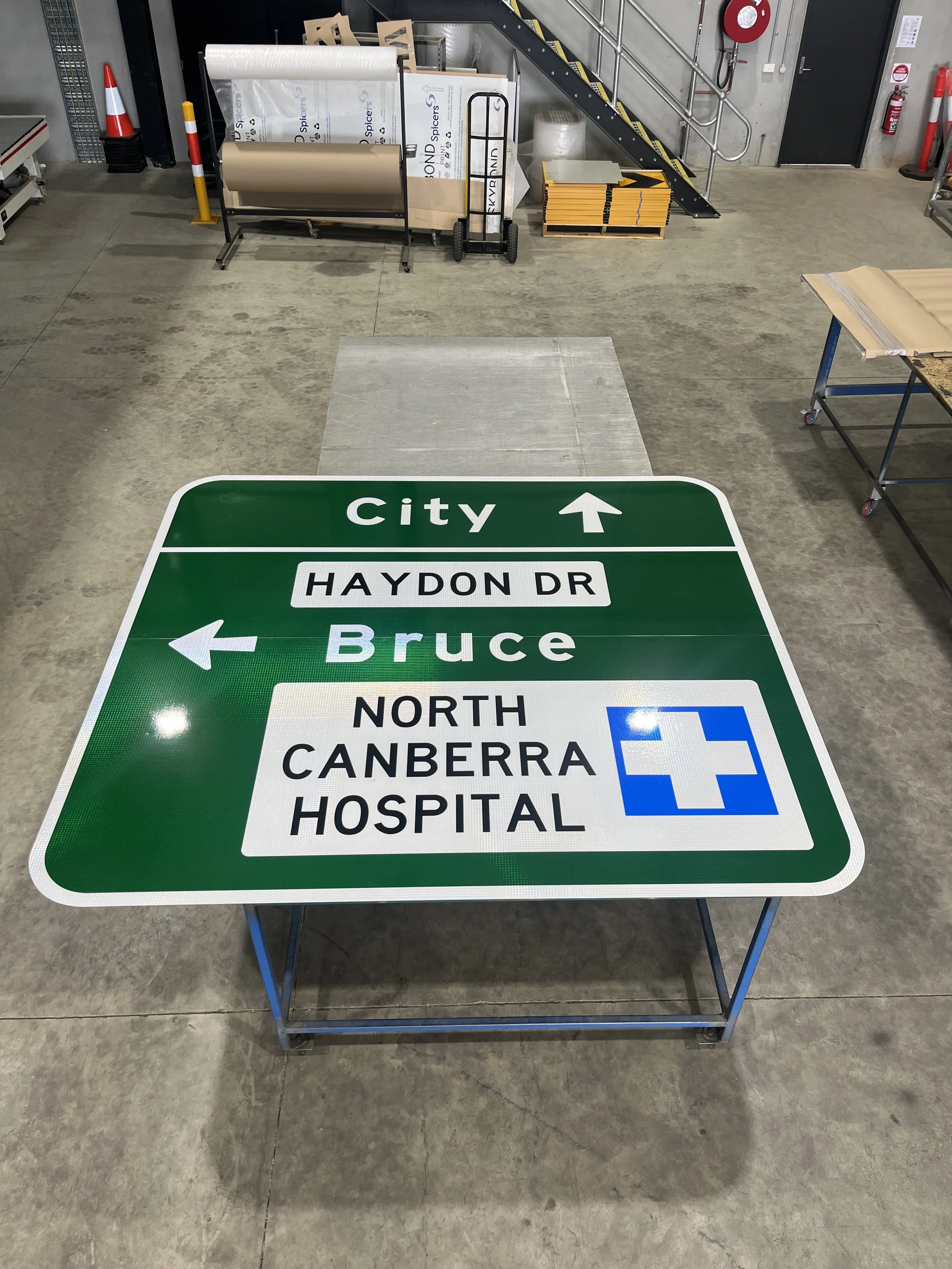
Class 1 uses an encapsulated lens or prismatic construction. Its night-time performance is substantially higher than Class 2, and it is generally applied to arterial roads, higher-speed environments, and most regulatory and warning signage.
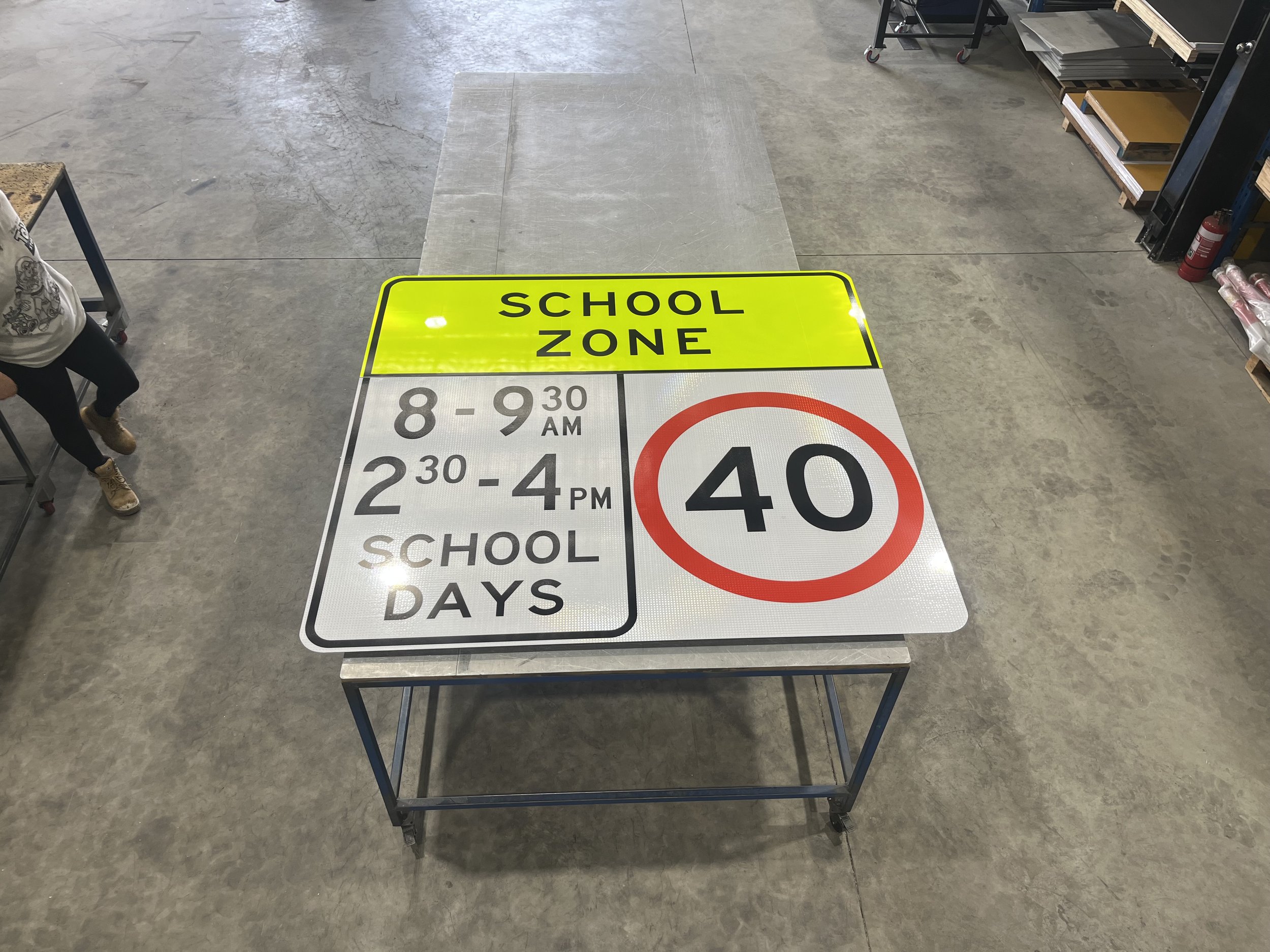
Special Grade uses a high-performance prismatic construction. It has the highest night-time performance of the three, particularly at wide angles, and is generally applied to motorways, high-speed corridors, and safety-critical and high-consequence signs.
The important point for a specifier is that these are not three grades of the same thing separated only by price. They behave differently in specific conditions, and the conditions are what should drive the choice.
Why does angular performance matter more than raw brightness?
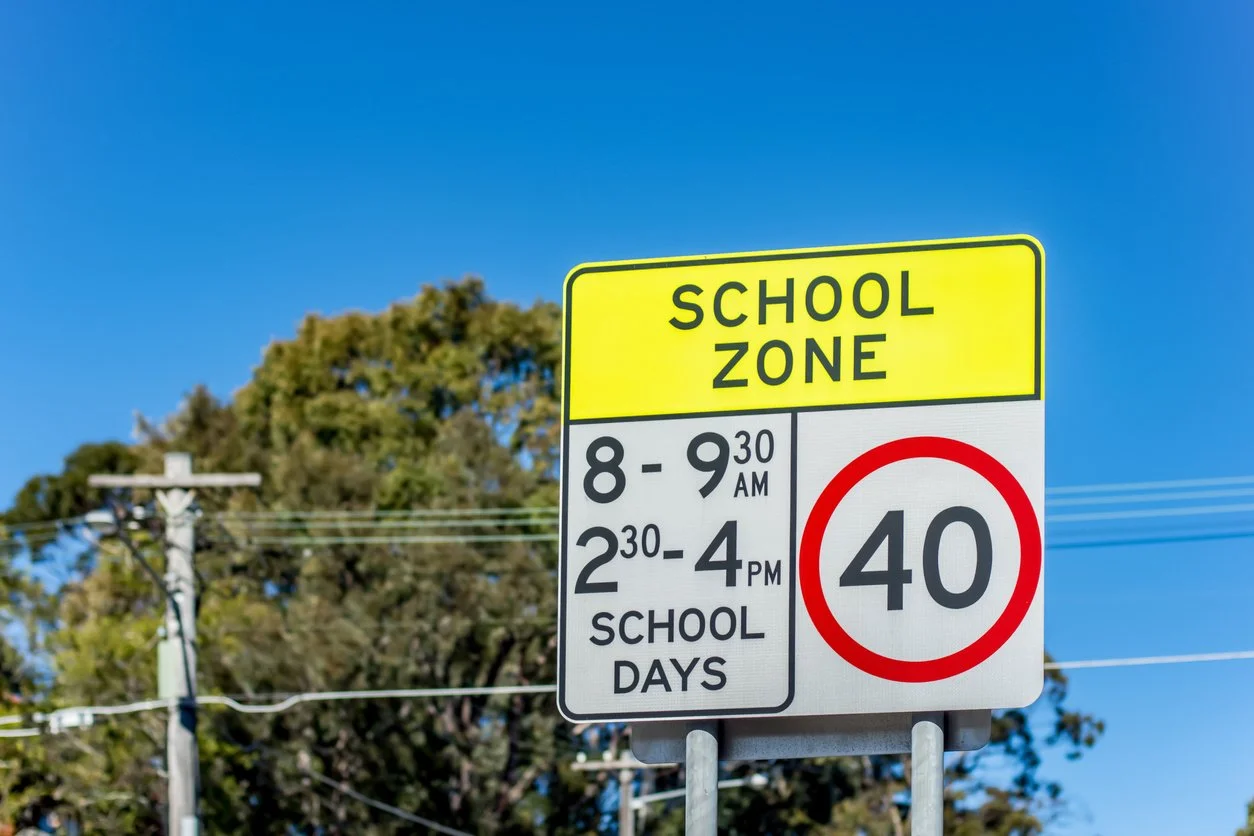
Observation angle is the angle between the headlight beam and the driver's line of sight. It grows as the vehicle gets closer to the sign, and it is larger in a truck, where the driver sits well above the headlights. A sheeting that performs well at a narrow observation angle and poorly at a wide one will fade out precisely as the driver approaches, and it will perform worse for heavy vehicle drivers than for car drivers.
Entrance angle is the angle at which light strikes the sign face. It is large for signs mounted at the roadside on a curve, on a wide carriageway, or where the sign is turned away from approaching traffic.
Higher-performing sheeting holds its output better as both angles widen. On a straight suburban street at low speed, that advantage is worth little. On a motorway, where the driver needs to read the sign from a long distance and is still reading it at close range, and where heavy vehicles are part of the traffic mix, it is the whole point.
How is the sheeting class decided?
For work on public roads, the class is generally not an open choice. The relevant state road authority specifies which sheeting class applies to which sign type on which road classification, and the project specification will reflect that.
Where judgement does enter, it is usually in one of these situations:
• Private land and facilities, where the road authority specification does not automatically apply but the sign still has to work at night
• Upgrading beyond the minimum, where a location has a demonstrated visibility problem, a crash history, or unusual geometry
• Non-standard signs, where the catalogue does not cover the application
• Long replacement cycles, where a higher-performing sheeting may hold its performance longer and reduce the frequency of replacement
Does higher-grade sheeting last longer?
Retroreflective performance degrades over time regardless of grade. UV exposure, weathering, surface contamination and physical damage all reduce the light a sign returns, and the loss is gradual enough that it is easy to miss until the sign is well below its design performance.
Two signs of the same class installed on the same day can degrade at noticeably different rates depending on orientation to the sun, exposure, and whether they are washed as part of a maintenance regime.
This is why sign condition assessment is a distinct activity from a visual daytime inspection. A sign that reads perfectly at midday can be substantially degraded at night.

What does this mean for procurement?
A few practical points worth resolving at enquiry rather than at delivery:
1. Confirm the class against the current authority specification, not against what was supplied last time. Specifications change.
2. Check whether different signs in the same package require different classes. Regulatory, warning and guide signs are not always treated identically.
3. Confirm the manufacturer holds all the classes you need in stock. A package split across two suppliers because one class was unavailable creates a lead time problem and a consistency problem.
4. Do not mix classes within a sign scheme unless the specification calls for it. Adjacent signs performing differently at night is confusing for drivers and reads as a maintenance failure.
5. Ask what the sheeting is being applied to. Sheeting and substrate are separate specification decisions, and both affect service life.
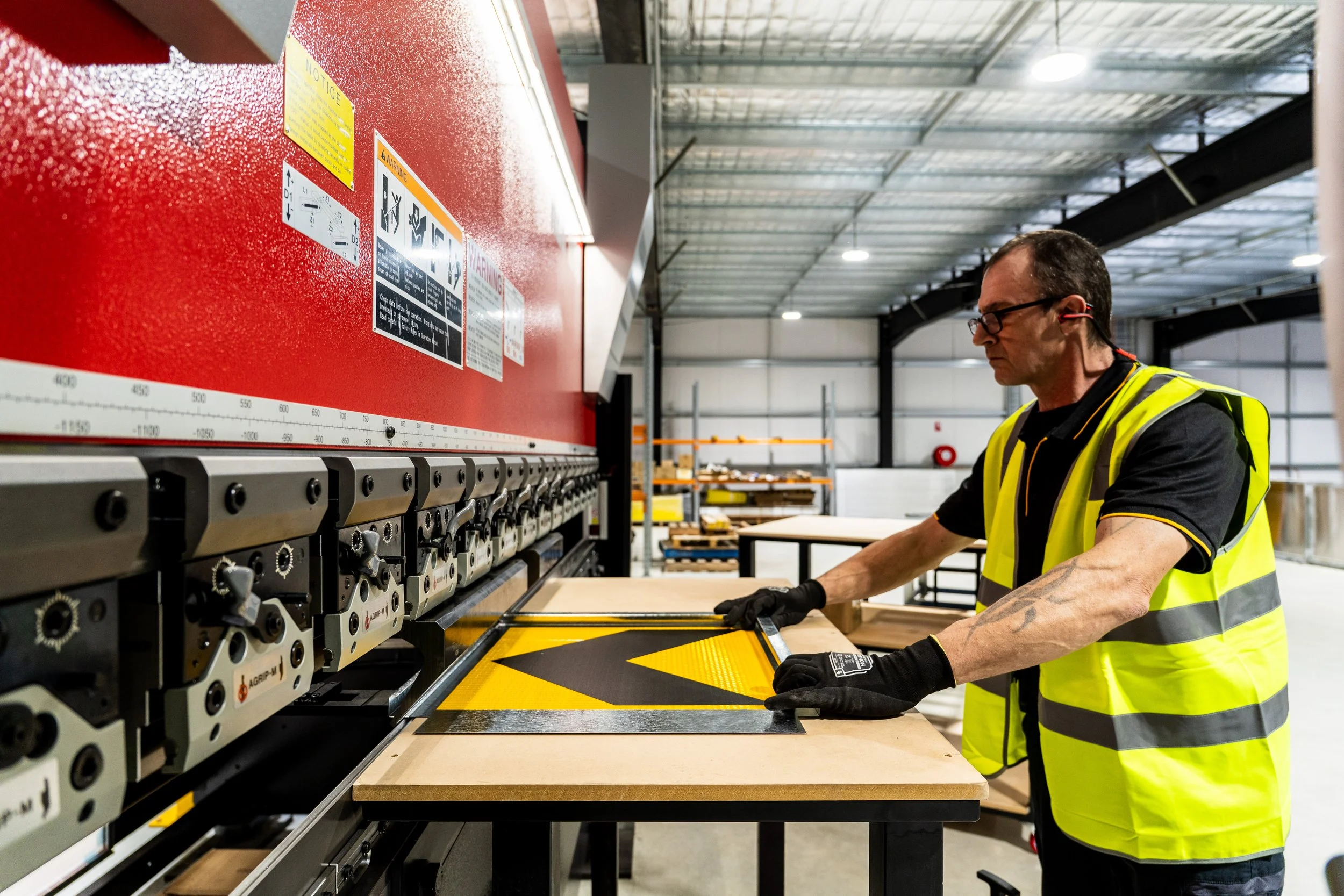
Action LSC produces signage in Class 1, Class 2 and Special Grade retro-reflective sheeting in-house, using wide-format digital printing, across a range exceeding 1,000 sign types to AS 1743 and state authority specifications.
Frequently asked questions about line marking standards
Can a sign be upgraded to a higher class without replacing it?
Short answer. Not practically. The sheeting is applied to the substrate during manufacture, so changing class means a new sign face.
Face replacement on an existing post and frame is often the cost-effective route where the structure is sound.
Why do some signs look brighter than others on the same road?
Short answer. Usually a mix of different sheeting classes, different ages, and different exposure.
On an audited network it is worth knowing which, because the remedy differs.
Is Class 1 always better than Class 2?
Short answer. It performs better. Whether it is the better choice depends on the road.
Specifying above the requirement on a low-speed local street spends money without delivering a safety benefit. Specifying below the requirement on an arterial is a compliance failure.
Does sheeting class affect daytime visibility?
Short answer. Daytime appearance is driven primarily by colour and contrast, which are governed by the standard for the sign type. The classes differ mainly at night.
Colour retention over time does vary, and a badly faded sign is a daytime problem as well as a night-time one.
Compliant sign manufacturing from Action LSC
Action LSC operates one of Australia's most capable road sign manufacturing facilities, producing standard and custom signs to AS 1743 and state authority specifications, with wide-format digital printing in Class 1, Class 2 and Special Grade retro-reflective sheeting, full compliance documentation, and Australia-wide delivery.